Monday, October 26, 2009

Austria


I don't know about you, but when I think of Austria, I automatically think of Julie Andrews spinning on mountain tops and the Von Trapps running away from the Anschluss to Switzerland. Admittedly, I've never watched this movie the entire way through. For those who have never seen "The Sound of Music" (or just bits of it), Austria may conjure up visions of the Viennese Waltz, skiing down the Alps and eating tiny sausages.

Now, given that last sentence, I know what you are thinking now.."Did they actually make little Viennese sausages?". We did not, however, we DID make large sausages. As this is the first country that has a deep appreciation for sausage, I feel the need to share our history with sausage making. Tom and I actually started our relationship over a plate of sausage that he ground up and stuffed himself. Tom explained to me how he used pig intestines for casings and what was in each sausage to make them different. I was a little grossed out, but more intrigued. A month later, it was my birthday and we made sausage together for the first time. If you ever get the chance to do it, and think you can stomach it, I highly recommend it. This meal provided us with the perfect excuse for busting out the meat grinder.

Farmer's Cheese Spread


1/2 lb farmers cheese (unsweetened!)
1 tbsp capers chopped
2 tbsps chopped anchovie fillets (packed in oil)
1/2 tsp paprika
1/2 tsp caraway
1/2 red onion roughly chopped
1/2 cup olive oil
Dark rye or pumpernickel bread for serving.

1. Combine everything except for the olive oil in a food processor.
2. Slowly pour in the olive oil with the blade running to form a rich paste
3. Toast bread and cut into thirds for serving.
4. Spread paste on bread and eat. I'd recommend drinking beer between bites!

Cauliflower and Green Pea Salad


1 head cauliflower
1 lb shelled peas (frozen are fine)
1/2 cup vinegar
1/2 cup stock beef or mushroom
1/4 cup olive oil
4 tbsp chopped dill
4 tbsp chopped parsley
1 tbsp sugar
Salt and Pepper to taste
Rosemary Mayonnaise for Garnish
(recipe follows)

1. Cut the cauliflower into small florets and blanch in boiling salted water for ten minutes. Drain cauliflower in a colander under cold running water. Then place the drained cauliflower in a large mixing bowl.
2. Blanch the peas in boiling salted water for five minutes. Drain under cold water and add to the bowl.
3. In a small bowl combine the remaining ingredients except the mayo and whisk together.
4. Pour the mixture over the vegetables and and allow 30 minutes to marinate or overnight in the fridge.
5. Portion out the vegetables for serving and add a dallop of rosemary mayonnaise to each portion.

Rosemary Mayonnaise

Seriously, it takes about five minutes to put together a good mayonnaise in a blender or food processor. And it tastes so much better than the strange substance sold in jars containing radiated eggs. I prefer to make mine in a processor because its much easier to scoop out.

1 egg plus one egg yolk (Be sure the eggs are cold when you start blending.)
1 clove garlic
1 tbsp lemon juice
1/2 tsp salt
3 tbsps chopped rosemary
3/4 corn oil

1. Combine all the ingredients except the oil in the processor.
2. With the blade running add the oil in a thin stream very slowly until a thick and fluffy paste is formed.
3. Pour the mixture into a bowl and refrigerate for at least 30 minutes to allow the flavors to develop.
**** Unlike store bought mayo, this stuff will only last about a week in the fridge. But that's ok because you can actually pronounce the names of the ingredients in this mayo and it tastes so much better. If you're feeding this to children or the elderly, try to use organic eggs. Our government's poultry standards allow for some pretty scary stuff to get into the mass produced eggs that can affect weaker immune systems. Last I checked Britain had the same problem.

Cabbage and Noodles: Krautfleckerl

1 head green cabbage cored and thinly sliced (about 2 lbs)
1 red onion thinly sliced
4 tbsp butter (about half a stick)
2 tsp sugar
1 tsp carraway
1/2 cup beer
Salt and pepper to taste
1/2 lb wide egg noodles cooked and drained
sour cream and dill for garnish

1. Melt butter over medium heat in a large pot or dutch oven and add the red onion.
2. Cook until the onion begins to brown. Add the sugar and carraway and stir to carmelize the mixture for about five minutes.
3. Add the cabbage and mix the contents of the pot well. Pour on the beer, lower the heat, and cover with a lid.
4. Cook the cabbage down for 45 minutes stirring occassionally. Now would be a good time to cook the noodles.
5. After 45 minutes uncover. The cabbage should be slightly browned. If not turn up the heat and stir it until it browns. Add the cooked noodles. Toss everything togeter. Add the salt and pepper.
6. Apply a tablespoon or so of sour cream and a sprig of dill to each portion. Serve.

Bockwurst

Good sausage needs at least three things: meat, fat, and salt. This recipe has all of it! Before starting, make sure you have a clean work surface, because this gets messy. You'll need a meat grinder with a sausage stuffing funnel. Or you'll need a food processor, a large funnel, and a lot of patience. Tom wounded himself while making these sausages, but fortunately our good friend Carl was there to help with the meat chopping. His hands are pictured below.

2.5 lbs of pork belly (skin removed) cubed
2.5 lbs pork shoulder cubed
3/4 tsp nutmeg
3/4 tsp mace
3/4 teaspoon pepper
3 tbsp chopped parsley
1/2 red onion diced
2 cloves garlic minced
1.5 cups heavy cream
2 tablespoons salt
Pig Casings for stuffing soaked in warm water for at least 30 minutes.

1. Run the meat through the grinding disc with the largest hole once.


2. Combine the remaining ingredients with the meat and mix well with your hands.


3. Run everything back through the grinder once more again on the largest setting.
4. Heat a skillet and fry up a small amount of the mix to taste for seasoning. Adjust to your preference.
5. Chill the sausage mixture in the fridge for at least 30 minutes.
6. Wash the casings in the sink making sure to run water through them. This can be disturbing, but with time you'll get used to it.
7. Load the stuffing attachment onto the meat grinder. Tie off a large length of casing and load the other end onto the stuffing funnel.
8. Run the mixture through the grinder into the casings. Be careful to move the casings as the meat comes out and don't let them get overloaded or they'll explode. If the casing does rupture, just cut what you've made, tie it off, and resume.


9. When all of your casing is stuffed, twist the sausage into links. Tie a small piece of twine between each link.
10. Gently poach the sausage for 15 minutes in water heated to about 180 degrees.
11. Remove the links, cut the twine, and gently grill, fry, or roast in the oven at 350 to brown the sausage.
12. Serve.

Apfelstrudel

2 pound of apples, peeled, cored and sliced
Filo dough
1/2 cup melted butter
2/3 cup raisins
3/4 cup sugar
1/2 cup ground walnuts
breadcrumbs
1 tsp. cinnamon

1. In a greased baking pan, start layering filo dough and brushing in between each layer with the melted butter. Use about 7-10 sheets of filo, depending on how flaky you would like the strudel.
2. Combine the walnuts and breadcrumbs together and sprinkle on the dough.
3. Place the apples on top of that.
4. Brush the apples with some butter.
5. Sprinkle the raisins on top of the apples.
6.Combine the cinnamon and sugar together and dust that on top of the apples and raisins.
7. Place another 7-10 layers of filo dough, with melted butter in between like before. Also, brush the top layer lightly with butter
8. Bake at 350 for 45-1 hour.
9. Enjoy by itself or with ice cream or whipped cream.

The Meal: Commentary

Austria was a little time consuming, but we have learned to make things in advance now. Believe it or not, in some of the earlier countries, we prepared all of the dishes from scratch after 6 o'clock on weekdays. This got to be way too much, as did making two meals a week. We realized that we could not make each meal as great as it could be because of time constraints and that simply would not do justice to an entire country's cuisine. We still may do two in a week when we are feeling ambitious, but for now, one a week will have to do.

Now on to the meal critique.

I made a mistake this meal by not using enough filo dough for the strudel. I had never used filo before and grossly underestimated the amount that needed to be used. Don't worry though, the recipe provided is definitely the way to go. The filling still was tasty and very apropos for the fall.

Our love for cabbage was once again proven when added to egg noodles. Everyone seemed to enjoy the sausage, however, I prefer sausages without cream.

All in all, I think we overindulged a tad. The food of Austria is not light fare. Everything is quite rich and filling. The meal paired well though with all the fine Austrian wine and cheap American beer we consumed. In fact, it may have paired too well, because I noticed my photography skills absolutely fall off the face of the earth, as you can see in the picture below.


We also had a visiting diner with us from Ball State. Thanks, Jess for joining us in our culinary endeavor, as well as reminiscing with me about good ole Muncie.

Only one more "A" country left. We are finally feeling like we hit a milestone! Until then, prost!!

Saturday, October 17, 2009

Australia


Australia is another of those countries where I tread lightly when approaching its cuisine, mainly because Amy and I have come to know a fair amount of Australians in our time. So, to all Australians we know, we hope we didn't screw up your cuisine, and if we did: sorry. For most American cooks Australia should not be too daunting of a country. Despite, being on the other end of the globe, the food is remarkably similar to what Amy and I grew up with in the midwest. This is probably because both our countries have a shared history of English colonization and large scale emigrations from Europe. Many ancestors of the Aussies, however, did not emigrate by choice, but were shipped to Australia as prisoners or debtors. The result of all this is a continent full of meat and potato eaters on the other side of the planet.

Our attempts at coming up with a quintessential Australian meal were a bit difficult. Of course there is a lot of amazing food in Australia, but it was hard to pin down what was specifically considered to be truly Australian and not just a good version of a foreign dish. This problem will undoubtedly come up again when we are planning for Canada, the U.S. and New Zealand. Our first thought for this meal was to get kangaroo or emu meat, but sadly the costs were sky high and the cuts available weren't very good. We then tried to go the purely seafood route, but realized that wasn't generally seen as strictly Aussie either. The meal we concluded on is an attempt at making several of the Aussie staple dishes as well as a few other dishes that are based on side items that I have eaten at the few Australian meals I've attended.

As we cooked, we made sure to play lots of Men at Work.

Vegemite and Australian Swiss with Toast


We were not able to find any vegemite here in Chicago. So we had to commit sacrilege and go with the British salty yeast extract spread, Marmite, as a substitute for Australia's classic vegemite sandwich. Nobody enjoyed the strange dark substance, but we Americans really have no history of spreading yeast extract on bread. Amy's friend Jodie tells us that a new vegemite is about to come out called cheesy-bite formulated for non yeast muncher palates that is blended with cheese product for a less strong taste.

1 jar vegemite (or marmite if you can't find it)
Cheese (we had an Australian Swiss)
Toasted bread

1. Toast the bread.
2. Cut the cheese...ha!
3. Open the vegemite and thinly spread on toast. Cheese is optional on the toast as well. I find everybody needed the cheese to get the yeasty taste out of their mouth. But maybe you'll enjoy it.
4. After a slice of toast each, we put this away because nobody liked it. If you do enjoy it, go ahead and keep eating it.

Potato Salad

This is one of those items, that while not a classic Australian staple, I am sure some Australians enjoy it. This particular version of potato salad is based on one I was served at an Australian embassy party when I was living in Hanoi. What made this salad different from our American standard was the inclusion of cheese and scallions and the exclusion of mayonnaise in favor of olive oil and mustard. I've been making my potato salads this way ever since.

3 lbs red potatoes
2 tsp English mustard powder mixed with 2 tbsps water
1/2 cup red wine vinegar
1/2-2/3 cup olive oil
2 tbsp drained and capers
1 bunch parsley chopped
1 bunch scallions chopped
1/2 cup medium grated parmesan or sharp white cheddar
Salt and Pepper to taste

1. Boil potatoes until you can pass a fork easily into the center of the potato. Be careful not to overboil them or else you'll get mashed potatoes. This can take practice.
2. Drain the potatoes and immediately run cold water over them. Give the potatoes 20 minutes to cool, and then cut them into 1 inch cubes.
3. Whisk mustard, oil, vinegar, capers, and parsley together in a large bowl. Add the potatoes, salt, parsley, scallions, and cheese to the bowl. Gently toss the ingredients to combine. Allow to sit until they come to room temperature and serve.

Southeast Asian Cole Slaw in a Macadamia Sauce

This was the least Australian of our dishes. Basically we needed to eat vegetables, and I could not find a typical 'Aussie' vegetable dish. So I got creative and came up with this recipe. The cabbage salad is typical of many Southeast Asian countries, and Australia has a very large Southeast Asian population. We substituted macadamia nuts for peanuts, because the macadamia is actually indigenous to Australia.

1 cup macadamia nuts
1 tablespoon ground coriander
3 tbsps soy sauce
1/2 cup coconut milk
3 tbsps honey
1 tsp chili paste
1/2 tsp sesame oil
1/2 head cabbage thinly chopped
1/2 red onion thinly sliced
3 medium carrots scraped and grated
1/4 cup white vinegar
1 bunch cilantro chopped

1. Preheat the oven to 350 f and cook the nuts 12 minutes or until lightly browned.
2. Combine nuts, honey, soy sauce, and coriander in a food processor and grind to a thick pulp.
3. Scrape the nut mixture into a saucepan and combine chili paste and coconut milk with ingredients.
4. Heat over medium flame until the mixture thickens into a thick sauce (about ten minutes). Set the sauce aside and allow to cool.
5. Now for the cabbage. In a large bowl combine the chopped cabbage with a bit of salt. Pound the mix with a masher to loosen the leaves and allow to sit for 10 minutes or until the cabbage softens.
6. Add carrots, onions, cilantro, vinegar, and sauce. Combine and serve at room at room temperature.

Shrimp on the Barbie

For many Americans, the mention of Australian cuisine elicits images of barbecued shrimp. This is probably the result of this very well made tourism video featuring Paul Hogan of Crocodile Dundee fame from the 1980's. At the end of the ad, Hogan puts an enormous shrimp onto the barbecue and invites you to 'come and say g'day' in Australia. Sadly, my shrimp weren't as large as Paul Hogan's, but lets face it we can't all be that awesome. The recipe itself, couldn't be easier.

1.5 lbs shrimp
1/3 cup soy sauce
2 tbsps chopped ginger
Butter
Chopped garlic

1. Marinate the shrimp in the soy and ginger for 30 minutes
2. Skewer the shrimp and grill over high heat for about two minutes on each side. And remove.
3. Melt the butter and add the garlic. Serve the garlic sauce in small bowls on the side.


Meat Pie

The quintessential national dish of Australia: the meat pie. Ground beef seemed to be the agreed upon standard for this dish, but I'm still partial to filling my savory pastries with pork. Also, as you can tell by the picture, we still have no pie pans in the new apartment so we had to make do with a loaf tin. It still worked, and I'll be eating the leftovers of this savory log for the next several days.

For the Filling:

2 lbs ground beef dredged in 1/2 cup flour
2 cloves garlic minced
2 tbsps butter
2 medium yellow onions finely chopped
1 tsp English mustard powder
1/4 cup Worcestershire sauce
1/4 cup soy sauce
1 tbsp coriander seed (ground)
1 tsp pepper (ground)
4 cups stock (beef or chicken)
2 tsp vegemite (marmite in our case)

1. Heat butter in a large cast iron pan and add onions and garlic. Cook over medium high until translucent.
2. Add the beef and cook until well browned
3. Add the remaining ingredients, bring to a boil, reduce to a simmer and cook over medium until the sauce forms a thick gravy (about 15 minutes).
4. Set the meat and sauce aside to cool.

For the Crust:

3 cups all purpose flour
1 cup lard
1.5 tsp salt

1. Combine all ingredients in a food processor and mix until a large ball of dough forms.
2. Turn the dough onto a floured surface and kneed for five minutes. Wrap the mixture in plastic wrap and refrigerate for 30 minutes.
3. Remove the dough and cut off 2/3 of the mixture.
4. On a floured surface roll the dough to 1/4 inch thickness and line a bread pan with the crust If it breaks as this happens fell free to smush it together, and tell nobody that anything bad happened.
5. Bake this bottom layer of crust for 15 minutes at 375 f in the oven until it is browned.
6. Roll out the remaining dough in a rough shape of the top of the pan also to 1/4 inch thickness. Cut two vent holes in the dough.
7. Trim the edges of the dough to fit the pan.
8. Fill the pan with the meat mixture and place the top piece over the mixture being sure to seal the edges.
9. Bake in the 375 f oven for another hour.
10. Allow 15 minutes to cool and serve with plenty of ketchup.

Anzac Biscuits (Cookies)

These are great old-timey cookies originally made in honor of Australia and New Zealand's overseas forces in the first World War. They are also incredibly easy to make. But the Anzac biscuits although simple in execution can easily become a tremendous failure. We learned this the hard way and had a trash can full of burnt cookie goo after our first try. So pay attention and you just might be able to make these truly amazing cookies.

1 cup oats
1 cup all purpose flour
1 cup brown sugar
2/3 cup shredded coconut
1 cup butter
1 tsp baking soda
2 tbsps boiling water
2 tbsps honey

1. Mix oats, flour, sugar, and coconut in a large bowl.
2. Melt butter and honey together in a small saucepan.
3. In a small cup dissolve baking soda into the water. Add this to the melted butter mixture and stir well.
4. Now add the butter mix to the bowl of dry ingredients and mix well with a spoon (not your hands because that butter stings!)
5. After it is well mixed place on baking sheets in two inch flattened balls. Leave lots of space between the cookies because they expand quite a bit.
6. Bake 12-15 in a 325 f oven.
7. Allow cookies 10 minutes to cool before removing them from baking sheets. This allows them to harden.
8. Eat cookies.

In Conclusion


The big winning items of the night were definitely the shrimp and the cookies. The meat pie proved to be a bit much with everything else on the table, but I'm fine with eating the rest at work this week. Everybody left with full bellies and Men at Work ringing in their heads. It was a surreal experience that Outback Steakhouse only wishes they could equal. We hope Paul Hogan would've been proud! Up next is Austria and Sausage making! Cheers, mates!

Wednesday, October 14, 2009

Armenia


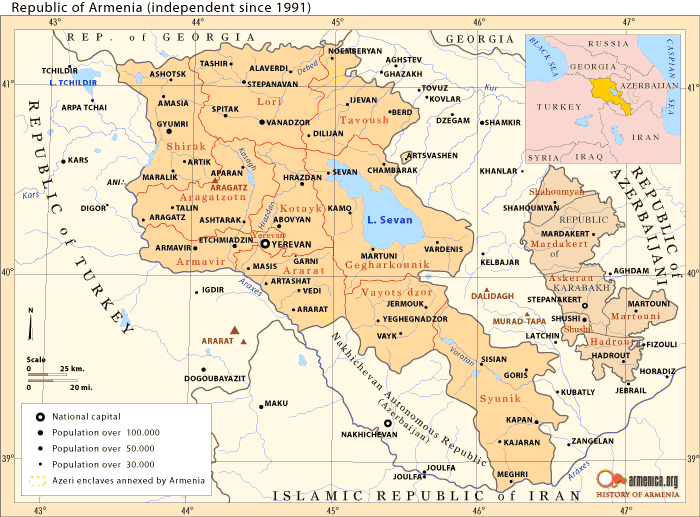
Historical foe of Persia, Rome, the Byzantines, and the Turks; Armenia is not just another former Soviet Republic. It is also the ancestral homeland of singer/songwriter Raffi, as well as the legendary docking spot of Noah's Ark! Not surprisingly, Armenian food is as rich as its history. The best way we can think of summing it up is to describe it as a cross between Turkish and Russian, but this explanation really doesn't do it justice. However, if you would like a taste of Armenia without spending a full night in the kitchen, we do know of at least one Armenian restaurant, Sayat Nova, in Chicago conveniently located on Ohio Street just east of Michigan Avenue.

However, if you don't live near an Armenian restaurant and you do enjoy making a meal for yourself and would like to explore other Armenian dishes, we recommend Sonia Uvezian's The Cuisine Of Armenia. We used this as our main inspiration for many of the recipes in this dinner.

Tomato, Bulghur, and Mint Soup


1 32 oz. can of whole stewed tomatoes
1 stick butter
1 cup bulghur
8 cups water
10 oz. spinach, cleaned and chopped
3 garlic cloves crushed
Juice of 1 lemon
A handful of freshly chopped mint
Salt and pepper to taste

1. Melt the butter in a large pot, add tomatoes and cook for five minutes over medium heat.
2. With a masher crush the tomatoes, add the bulghur, and cook for another five minutes stirring frequently to avoid burning the grains.
3. Add the water, spinach, and garlic. Bring the soup to a boil and reduce to a simmer.
4. Cover and cook for 40 minutes over low heat.
5. When ready to serve thin the soup with water to desired consistency. Garnish with mint and lemon. Check for seasoning and serve!

Chilled Green Beans with a Walnut Sauce

2 lbs green beans trimmed and washed
2 cups walnut
1 large yellow onion finely chopped
3 tsp paprika (good stuff not the cheap crap)
1/2 cup red wine vinegar
Broth for thinning the sauce
Chopped parsley for garnish
Salt to taste

1. Boil the beans for ten minutes, drain, and immediately rinse in cold water.
2. Combine the remaining ingredients, except the parsley, in a food processor and blend to a paste. Add enough broth to form a paste like sauce.
3. Toss the beans with the sauce and chill before serving.

Rice Pilaf with Toasted Sesame Seeds and Almonds

1/2 cup sesame seeds
1/2 cup almonds
2 cups long grain rice (we used Jasmine)
4 cups chicken stock
1/2 cup butter
Salt to taste

1. Melt the butter in a large pot, add the rice, and cook over medium heat for five minutes stirring often.
2. Add the stock, raise to a boil, and reduce to a simmer. Cover the pot and cook over low heat for 20 minutes.
3. While this is cooking bake the sesame and almond in the oven at 350 for 10 minutes.
4. Fluff the pilaf before serving and add the almonds and sesame.
5. Taste for salt and serve.

Eggplants Stuffed with Beef

1.5 lbs. ground beef chuck
2 roma tomatoes
2 large yellow onions diced
2 cloves garlic chopped
A handful of parsley
4 tbsp butter
Salt and Pepper
3 large eggplants

1. Cut the eggplants in half lengthwise and scoop out the flesh with a spoon carefully being sure to leave enough flesh for the eggplant to keep its shape. Salt the shells and set aside.
2. Melt the butter in a large pan over medium heat, add the chopped onion and cook until translucent (not brown).
3. Add the beef and cook until browned.
4. Add the tomatoes, garlic, parsley, salt and pepper. Cook for another five minutes and remove from heat.
5. Stuff the hollowed eggplants with the beef mixture. Arrange them in casserole dishes with a small layer of water to prevent the eggplants from burning.
6. Cook in a 400 f oven for 1 hour or until the eggplant is completely cooked. Serve!

Butternut Squash Dessert

2 lbs. butternut squash cubed
2 cups sugar
1 cup water
cinnamon
2/3 cup heavy cream

1. Combine squash with sugar and water and cook over low heat covered until the water is evaporated and the squash is tender.
2. Mash it!
3. Chill it!
4. Mix cream with some sugar and whip until it reaches your desired thickness.
5. Top chilled squash with cream and cinnamon. Enjoy! There's a lot of it!

The Result

The soup was unbelievably simple in execution and very pleasing to the palate. We plan on making this soup over and over again, as it is filling, delicious and tastes possibly even better as leftovers.

The pilaf was a hit in my book as well as with some of Tom's coworkers. The toasted seeds and almonds gave the rice a kind of crisp, bitter quality, much like baked pumpkin seeds.

At first, we were going to serve the beans as an appetizer while we were waiting for the eggplant to finish baking, but as it turns out they were much too strong of a flavor on their own. Once we plated them with the rest of the meal, we found that the beans complimented the other flavors from the pilaf and eggplant rather than dominating them.

When you first look at the size of the eggplant, it looks completely overwhelming in quantity. Once we started digging into it though, it was more like eating a stuffed cabbage or pepper. Tom likes to think of it as a meat pie inside of an eggplant, which just really means he's happy not to have to roll out dough.

The dessert of squash mash is something that is meant for a large group of people or several champion squash eaters. After all of the other courses, it was hard to eat, as it is also very filling. It seems as though it was not for everyone at our table, but it's hard to say if it was the full tummies or the tastes of the crowd. However, Susie, the dachshund could not get enough of it.

Australia will be later this week and then only 2 more "A" countries (whew!). Until then, kenats't!